
Bombay, Salsette, Thana, Bassein and its surroundings have ample of ground water. At least that was the case before uncontrolled rampant development was allowed without taking into consideration the wishes of the East Indians of Bombay. Being native to this area and having lived for centuries, they were aware of the flow of sea water, the natural drainage of rain water, the need to preserve the water bodies like lakes, ponds, rivers and of course the wells.
Tills date most building constructions are allowed to use the ground water. However, none of these constructions allow open ground for the rain water to go into the ground. The Governments “rain water harvesting” is just a slogan and for the local municipality to earn bribes when the said “rain water harvesting” facilities are not incorporated by the constructions.
The fact that Mithi river which was a sweet water river having portable water is now literally treated a a sewage nalla. The other rivers Ulhas, Vaitana, Oshiwara, Dahisar, Poisur are also not being protected to rampant misuse and encroachments. Lakes of Bombay like Vihar lake (which has a Church buried in it), Powai Lake, Tulsi Lake, and many smaller lakes defned as Tanks could be found around Bombay
Village wells
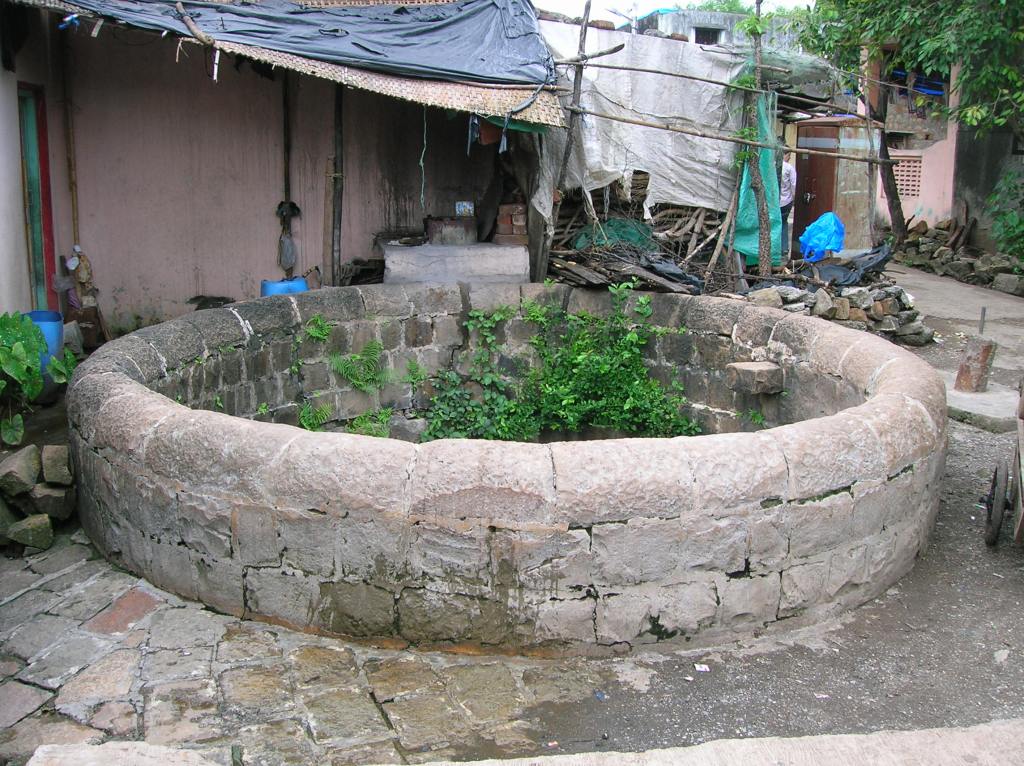
For East Indians, their village well was very critical to their daily life. Almost all of these village wells were made by the villagers themselves. Since it was “built” on open land and not on private property, it got considered as municipal wells. Since Bombay has piped Municipal water, the BMC often finds excuses to close down wells, tanks, pond etc…to get real estate, which ends up with the builders rather than the villagers or even the general population
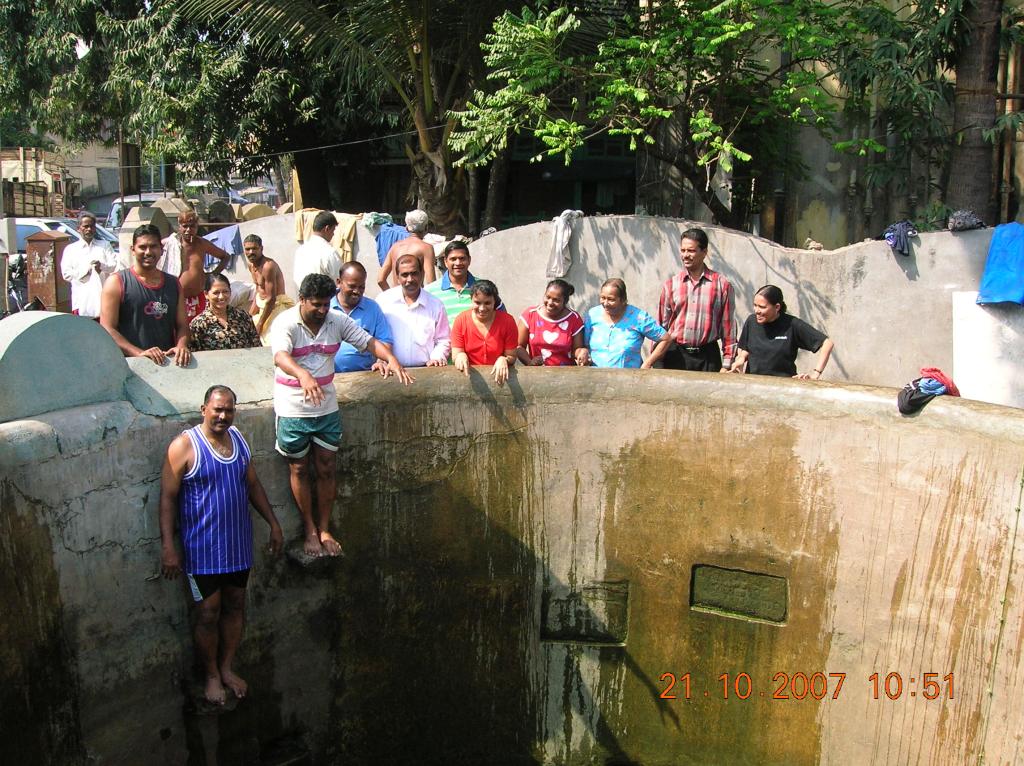
The village well is a gathering point of celebration for St. John Feast. The East Indian village of St. John’s Pond Gauthan near Bajaj Road, Vile Parle West, celebrate the feast of St. John the Baptist, till date, by jumping into the well.
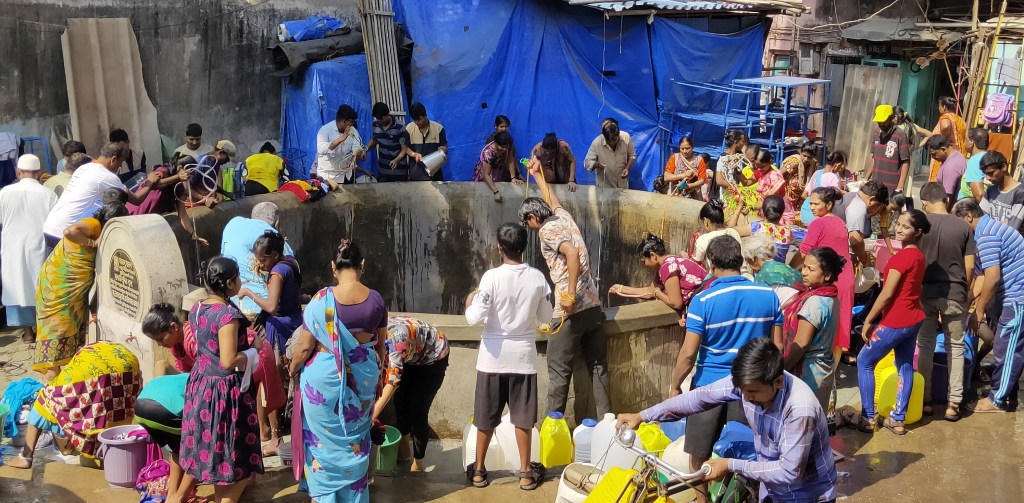
The BMC has often tried to close the village well at St. John Pond Gauthan, the East Indians always are the first to protest, in order to protect their way of life. We have to remember that one of the key marriage celebration of the East Indians is Umbra-cha Paani, a pre-marital function that the relatives of the bride/groom go to the village well to pray, seek blessings and bring some of the village well water for the bride/groom to bathe in.
Depicted in the above picture, when the BMC could not supply water to Bombay for 3-4 days, the elites bought tankers to their societies. These tankers took water for wells around villages. The East Indians did not allow tankers to take water from this well as the villagers needed it, but they allowed people from surrounding areas to come a take water from their well. This ancient well in St. John Pond Gauthan shows the apathy of BMC to the poor people residing in Bombay. Effort are on to try and adopt this well by the local East Indian Community.

Village well in the lake near Manori. The villagers of Manori, knew that the lake water will recede during summer and had the forsight to build the well to ensure that the villagers have drinking water throughout the year. Today’s development rules demand water harvesting in constructions, it used to be a way of life amoung the East Indian villagers.
Lake at Sahar

A photo from early 1900’s showing the lake (tank) with the village in the background. This was decades before the airport came up behind the village. The road to Sahar came up beside this lake.
Similarly there was a lake at Kalina and many others parts of Salsette.
 The East Indians of Bombay