
Early History
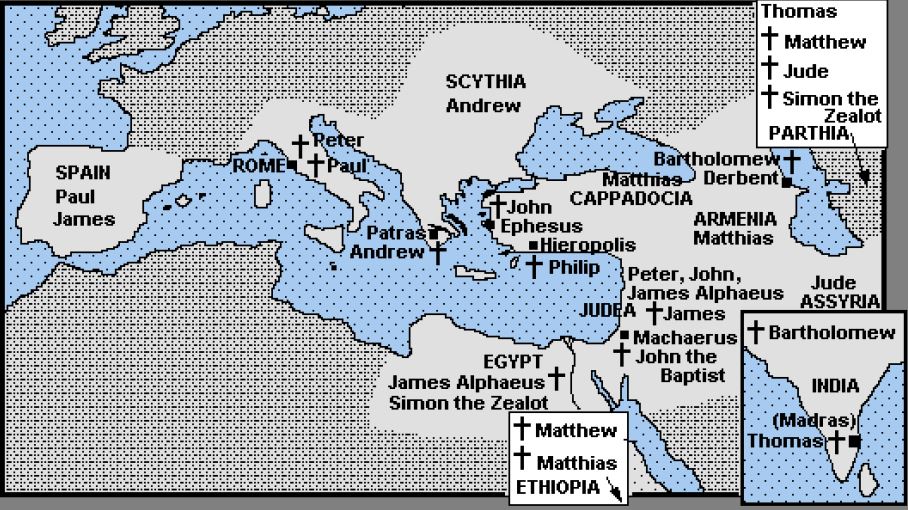
Though It is commonly thought that the origin of Christianity in North Konkan, was due to the proselytizing activities of the Portuguese in the 16th Century. It was, St. Bartholomew, one of the twelve Apostles of Christ, who preached in North Konkan
There are indisputable evidences of this fact by the writings of Kosmos Indicopleustes of his having seen in Kalyana a flourishing Christian Community in the 6th Century and of Jordanus, of his having labored among the Christians in Thana and Sopara in the 13th Century. Friar Jordanus’s evangelizing activities in Thana and Sapora was the first work of Rome in North Konkan.
Sopara was an ancient port and an international trading center. The sea water once extended all the way to Bhyander creek thus making the whole area extending from Arnala to Bhyander an island – referred to as Salsette island.
In the time of the Buddha, Sopara, (Ancient Shurparaka), was an important port and a gateway settlement. Perhaps this induced Ashoka to install his edicts there. Sopara is refered in the Old Testament as Ophir, the place from which King Solomon brought gold; 1 Kings 9:28, 10:11. Cf. Psalms 45:9, Isaiah 13:12. Josephus identifies Ophir with Aurea Chersonesus, belonging to India (Antiquities 8:6:4). Septuagint translates Ophir as Sophia, which is Coptic for India. This refers to the ancient city of Soupara or Ouppara on the western coast of India. It should then come as no surprse that contact with India dates as far back as the days of King Solomon.
Pantaneus visited India about AD 180 and there he found a Gospel of Matthew written in Hebrew language, left with the Christians there by St. Barthlomew. (Reference to the same can also be found on this YouTube VIdeo). This was also mentioned by Eusebius, and by Jerome in one of his letters. The finding of a Gospel of Matthew left with the Christians by Bartholomew is very strong evidence to the existence of a Christian community in India in the first century at the time of the visit of St. Bartholomew. It traces the history of the Church in India to the first century. In fact it is an independent confirmation of the Indian church’s ancient and apostolic origin.
Most history of The Indian Church was lost between the 9th and the 14th Century, as Persia went over to the Nestorianism in 800 AD. Since the provision of Church offices and all the apparatus of public worship, was looked to a foreign source; when this foreign aid was withdrawn. the Indian Christians were reduced to “nominal” Christians.
Portuguese Christians
The Portuguese came to India in 1498 to “evangelize and trade”’”. Little did they know that they had come to a land which had the unique distinction of having heard the preaching of two of the Apostles of Christ, St. Thomas and St. Bartholomew. None of them made the slightest attempt to understand the venerable civilization of Indian so much more ancient than their own.
The whole policy of the Portuguese, who came to India in 1498, was to bring the Indian Christians under their concept of Roman Catholism. The Bramhins Prabhu and other high-class Hindus who were prudently and ceremoniously converted were treated by the Portuguese with honor and distinction. In stark contrast, was the attitude of the Portuguese to those groups who were engaged in cultivation, fishing and other rural occupations handed down to them by their ancestors. These groups were given neither education, not proper instructions in the dogmas and doctrines of the church. Among the converts the Portuguese made, it cannot be denied that a large number of them were decendants of the Christian Community founded by Apostle St. Barthomolew . But these new converts were not strangers to the old Christians. They were their own people with whom they had been living for centuries. The Portuguese however welded them into one community. Ever since then, this community has remained a separate entity, without becoming one with any of the other Christian Community. In certain instance, they were even referred to as “Portuguese Christians“.
British Era
The Dowry

Charles II (r. 1660–85) married Catherine of Braganza (daughter of John IV of Portugal) in May 1662. Part of her dowry was the Portuguese territory of ‘Bom Bahia’ (Bombay). This was just the 7 islands (including Bombay / Mobai). On 27 March 1668, for a nominal rent of £10,The king leased these islands to the East India Company which soon became their base.
Portuguese Maratha COnflict
During the early days, there was co-operation between Chhatrapati Shivaji Maharaj and the Portuguese. Technological help in terms of ship building was shared by the Portuguese. It was only on 17th Feb 1739 that the Marathas under Chimaji Appa (the younger brother of Peshwa Bajirao I) attacked Bassein (Vasai) and defeated the Portuguese. The rampage of Bassein contined onto the island of Salsette but did not proceed to the islands off Bombay. This speculated the British hand in instigating the conflict which many Churches were destroyed and Native Christians slaughtered.
British Maratha Conquest
The First Anglo-Maratha War ended on 17th May 1782with The Treaty of Salbai between the British East India Company and the Maratha Confederacy which the latter gave away Salsette to the British. Together with the 7 islands of Bombay and the much larger island of Salsette became what was later termed as “Greater Bombay”
East Indians Of Bombay
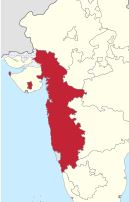
On 20th June 1887, the occasion of The Golden Jubilee of Queen Victoria was celebrated. A delegation of Native Christians from Bombay presented themselves collectively as the Native Christians of Bombay Province and adopted the name of “The East Indians of Bombay” to be one under the British law.
Double Jurisdiction
Fortunately, for the some of the educated Native Christians, they were the only people in the regions, who were able to read the Roman characters, and it was from this class that the British drew its supply of clerks, assistants and secretaries. With development, came in railways and steamship, a boon for the traveling public. And with that came a number of emigrants from Goa and Mangalore, which were also known as Portuguese Christians. Alongside this was the religious power struggle between the 2 religious structures, (1) The Apostolic Vicar of Bombay directly dependent on the Vatican’s Propaganda Fide (2) Padroado Real do Oriente under the Portuguese Archbishop of Goa. (The details of this conflict can be found in the archives), however this discord drew lines between “The East Indians of Bombay” and the “Portuguese Catholics” who until then were not differentiated. The East Indians of Bombay having pledged before Queen Victoria in 1887 were with the Propaganda and were at the forefront to get all the churches under a single local jurisdiction.
Conclusion
East Indians of bombay
The East Indians of Bombay are native Christians of Bombay Province.
Stating that they are East Indians are from Mumbai, brings the East Indians down to a community post 1990 (when the name, Mumbai, was adopted, this was without a referendum of natives living in Bombay and Salsette) and secondly this name alienates the East Indians from places like Chaul (Raigad), Dahanu, Palghar, Manor…etc.
Due to the name “East Indian”, most jump to the conclusion that it links up with “The East India Company” and that most East Indians got jobs from them. We have to remember that the British Crown were displeased with East India Company (which was closed in 1874). Just imagine petitioning Empress Queen Victoria with a name that displeased her !!! Impossible. The name “East Indians” was purely done to unite different castes who were Christian and bring them under under the British law. In those days (pre 1887) in British India, there were 3 laws operating (1) The British Law for the British (2) The Hindu Law and (3) The Muslim Law. A native Christian often would not get relief under the Hindu or Muslim Law and the British law was only for British subjects.
Hence a petition was made by Mr. Ricketts in the House of Commons in 1831 for the Native Christians of Calcutta to be called “East Indians” and brought under British Law. The same was later done by the Native Christians of Madras and in 1887 by the Native Christians of Bombay.
In the article “who are East Indians” that can be found in The Golden Jubilee Souvenir 1937 on the Archives page it mentions that one of the reasons was Jurisprudence. And since, in 1937, East Indians were in a majority, there was no need for further classification or clarification.
 The East Indians of Bombay