
Sugar Ceremony
The East Indian Community is steadily loosing count of some cherished customs of marriage. The proposed marriages are practiced by a large section of he community though love marriages are popular. The proposal of marriage usually emanates from the girl’s relatives. After completion of inquiries the acceptance of the proposal is conveyed through a Match Maker. The dowry in the form of gold ornaments, clothes, and other gifts is settles subsequently. Thereafter, Sakhar Puda is arranged and the family relatives join for the function at he boy’s residence. Customarily, the transaction is announced prior to exchange of sugar and cheers between both the parties as a mark of new relation. The Engagement ceremony has been waived in the present economic stress. Traditionally, The East Indians marry with their relations. However, mixed marriages are on the increase.
Marriage Ceremony
Marriage celebrations among the community conform to the traditional mode of ceremonies. The celebrations last for five days. In the pre-industrial days, February was the month devoted to general marriages due to occupational leisure from farming activities.Though rare, one may still be able to see “Wedding Sunday” in places like Uttan.
.The general rejoicing starts almost from the day the first `Bann’ are announced in the Church. There are 3 ‘Bann’ announcements on the 3 Sundays preceding the Marriage. This is read n both the parishes i.e. the Brides parish as well as the Bridegrooms parish. This is to give opportunity for anyone to come forward to object to the marriage, if they have a just reason.
The practice of personal invitation,`Avat’, is considered respectable though printed invitations are in fashion. Young boys went from door to door with Chunna (limestone) water drawing a cross near the house entrance, stating that “(name of brides father or mother or old relation) has requested your presence at the wedding via the marking (invitation) of the Chunna”. Invariably the whole village was invited. The family relatives are given `Maan’ by a close family member (mother, father, uncle, aunt) going to invite personally. IF “maan” was not given the family though knowing of the marriage, would not attend. Those who could afford, a saree was given to the Aunty as a part of the invite. A point to note, in those days, if the parents were invited (or grand parents), it automatically meant that the children (and grand-children) were invite…, unlike these days if on the card “&fly” (“and family) is not written, it is considered that the children are not invited. While this may not be intentional, this has become a trend…unfortunately.
Thursday before the Marriage : Mandap (Mandav / pendal) is erected in front of the house. The main post towards the entrance used to have coconut palms. Reverence was given to mother earth by putting few coins, beetle nuts (supari), flowers, etc….under the main post of the Mandap. Chawl Charni (Pounding of the Rice) was done by the ladies in the afternoon and this atta (flour) was later used to make the wedding papad at night. The wedding pickle was also prepared and left to marinade for couple of days before the pre-wedding ceremony. The carrots were cut couple of days prior and kept to dry in the sun, this helps the marination.
Friday before the marriage: This was the day for all general preparations. Generally a fattened pig was cut to make Indal and Salpatel. General Preparation
Saturday: At mid-night a torchlight procession of dance and singing for UMBRACHAPANI, wends its way to a village well. They pluck mango branches, drop them in the vessels carried by KARAVLYAS and the water is drawn from the well for the bridal couple’s purificatory bath for Sunday Morning. At the well a bon-fire is lit to roast the papads made earlier in the week. The papads and coconut were served to all.
Sunday : Wedding Day
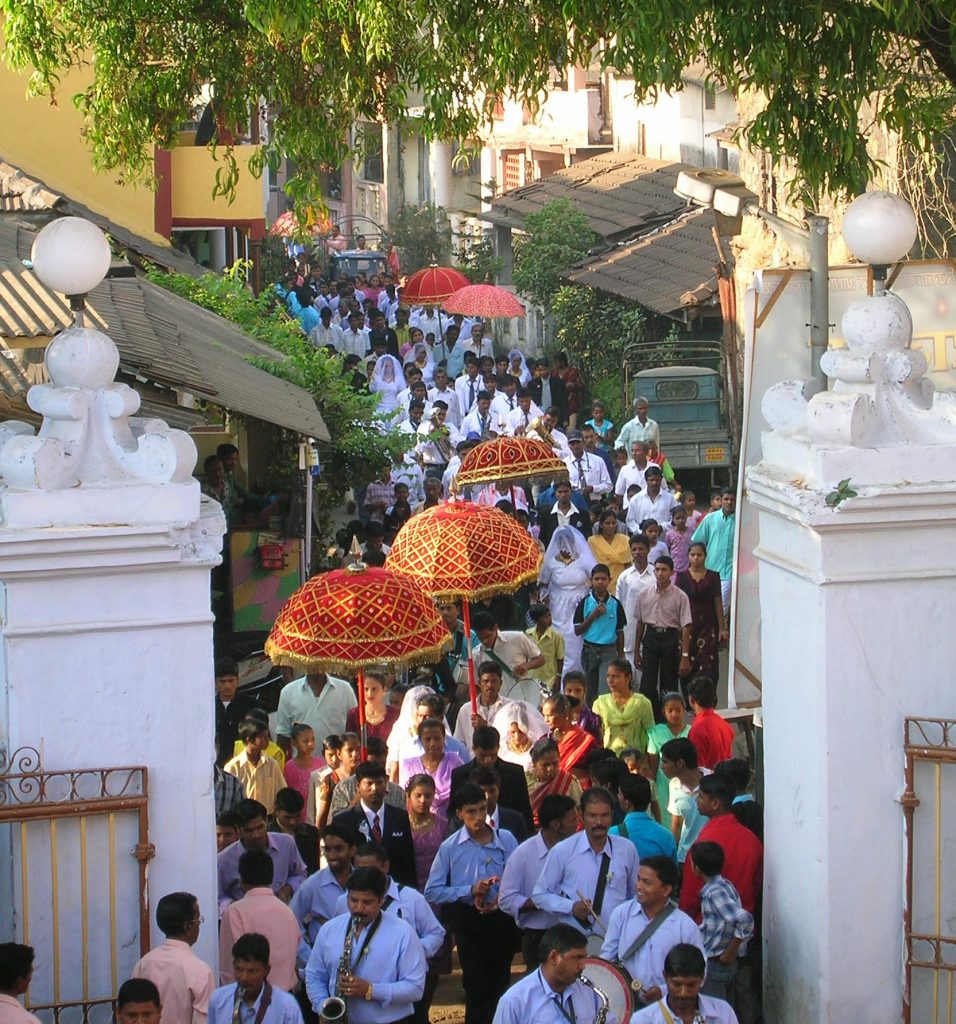
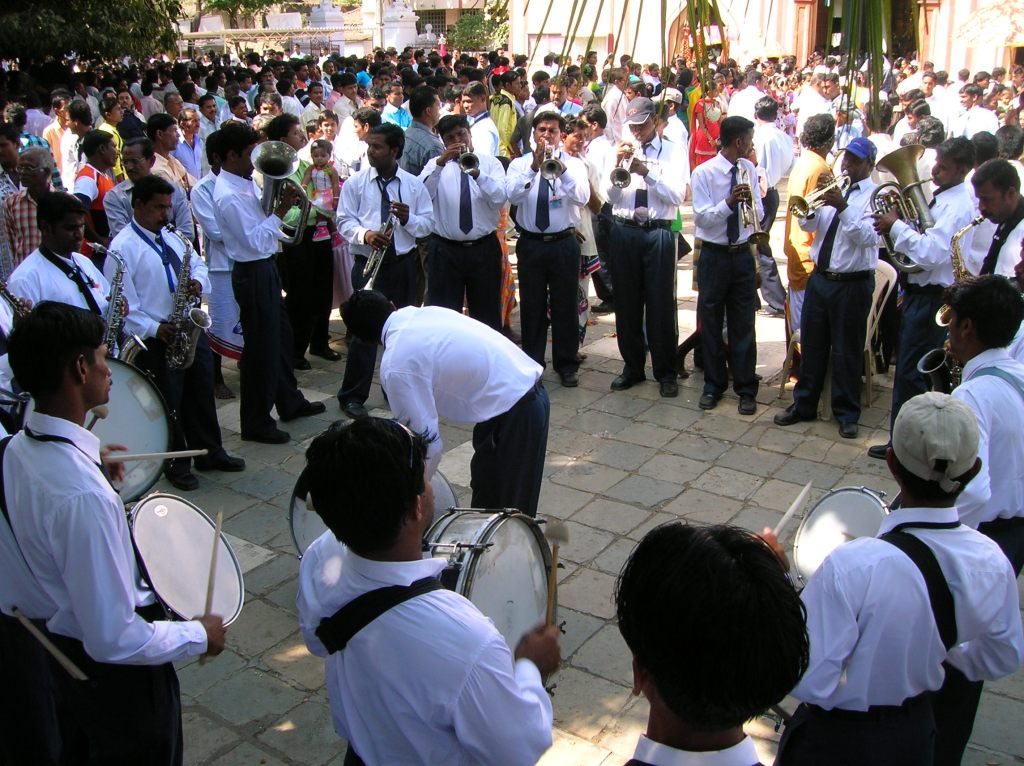
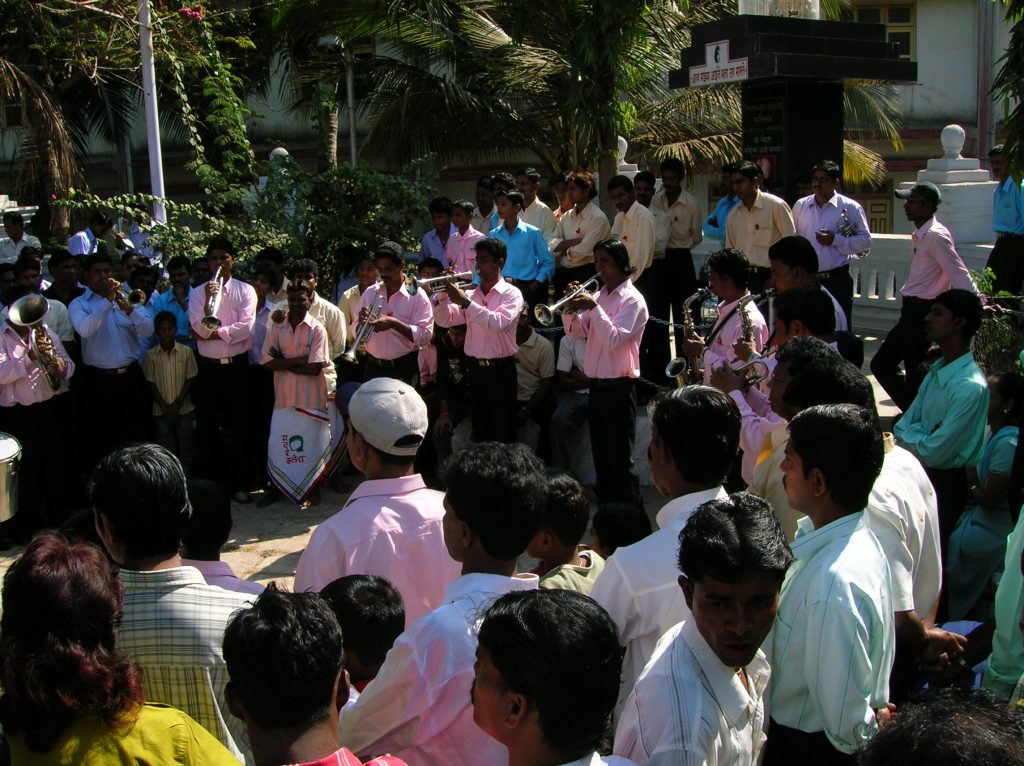
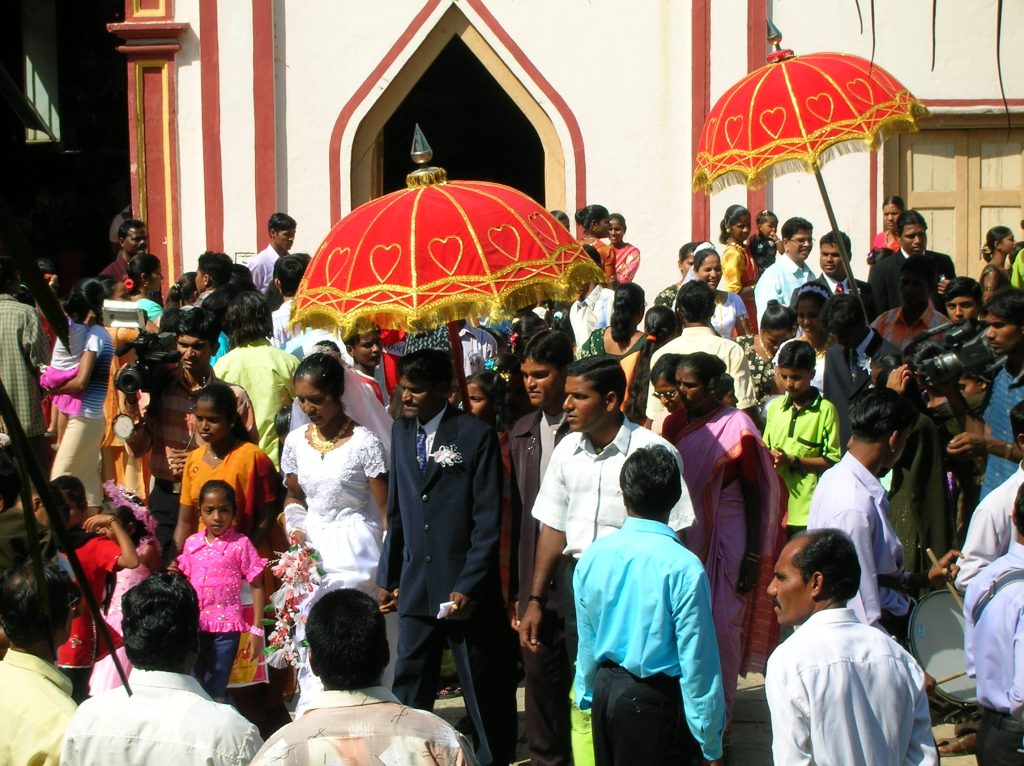
While the bridal couple dress, local wedding folk song are sung. The bridal couple receive blessings form parents and relatives before leaving for the Church. The Bride throws a handfull of rice over her shoulder as she steps out of her house for the last time as a spinster. The throwing of the rice over the shoulder was to signify the leaving of her life behind at the house of her parents. The Bridegroom more foten reaches the Chruch first and send the local band (vajantra) to the Brides house. The Brides party walks in procession to the Church. The affluent used to hire a palaquin for the bride. In variably both processions (Bride’s side and Bridegroom Side) is led by the brother or sister where the Bride (Bridegroom) walk under the colorful SATIR. Members of the family, relatives and friends join the nuptial mass in the Church. When the Bride arrives at the Church the Best-man (Kupari) hands over her bouquet. In recent days, the Priest comes to the entrance of the Church to welcome to couple by sprinkling Holy Water on them. The impressive ceremony of uniting the couple in Holy Matrimony in the form of consent and marriage vows (I DO) take place during mass and Rings are exchanged. The couple leave the Church in procession to the bride’s house.
Sunday: Reception
The wedding party adjourns at Brides residence for a short reception and then retire to a near by UTARGHAR. The couple leaves for photography to the studio and in the meantime invitees gather to wish the couple and raising of the TOAST, the wishing starts and each guest showers a few flower petals or confetti’s and feed the couple with a pinch of sugar or a piece of date. Then, the good wishes for a happy married life are conveyed with the shaking of hands and a useful gift is presented. The presentation of SARA is an important and colorful function on the wedding day afternoon and PANCHPOTHNI on the next day.
Monday: PANCH POTHNI is celebrated the next day of the marriage there the people from the Bridegrroms side come to visit the couple at the Brides house and take them to the marital house. JHETAR…Sumptuous dinner specially served to honor all those attended marriage and presented gifts
Wedding SUnday
Wedding Sunday was a of great celebration within a Parish. One this one day couple got married in Church with great festivities. Some Churches have had 40+ couple getting married at one time. This custom has dwindled over time, as couples are more interested in the fanfare, “Special Day celebrations’ and spending more money on their weddings than they can afford in their lifetime.




 The East Indians of Bombay